Artemis II Astronauts Reveal the Surprising Truth About Seeing Stars in Space
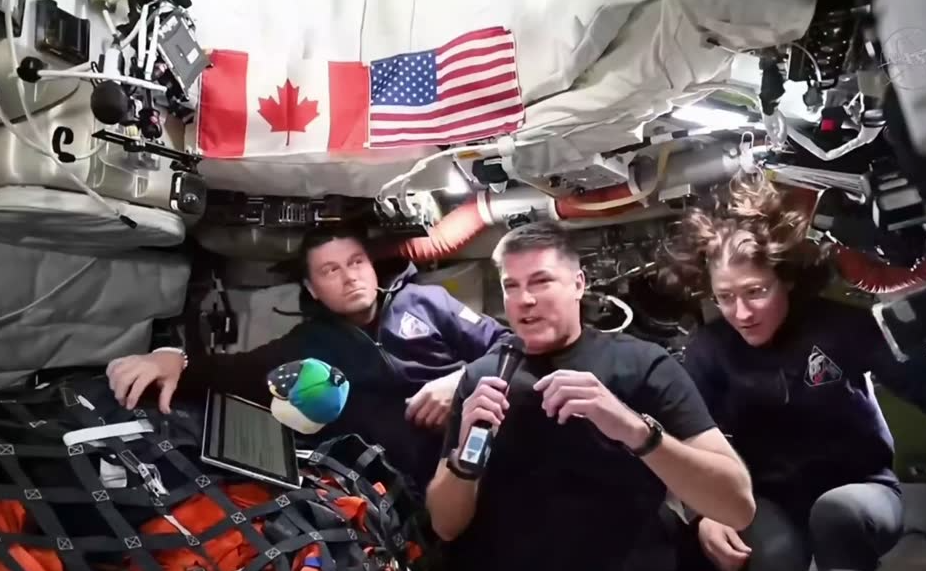
NASA’s Artemis II crew just delivered a calm, no-nonsense science lesson to a young viewer asking why stars are tough to see from space. Astronaut Jeremy Hansen: “Yeah, I was actually just talking to my crewmates about that today. I’ve definitely seen stars in outer space, and I was saying I haven’t as many as I thought I would.” Reid Wiseman followed up: “We have so much illumination from the sun on the moon and the earth right now, it is hard at times to see stars, just like when you walk out in the daytime, you see a blue sky but no stars.” Basic physics. Bright sunlight reflecting off the Moon and Earth washes out the fainter stars — exactly like daytime on Earth. These American heroes are orbiting the Moon, inspiring the next generation, and doing what NASA does best: pushing human achievement to the edge of the final frontier.
When we imagine space, we often picture a sky overflowing with bright, endless stars shining in every direction. It’s a powerful image—one that has inspired generations. But according to NASA’s Artemis II astronauts, the reality is a little more surprising—and a lot more grounded in simple science.
During a recent interaction, a young viewer asked a question many of us have probably wondered at some point: Why is it so hard to see stars in space?
Astronaut Jeremy Hansen gave an honest and relatable answer. He explained that even while traveling beyond Earth, the view isn’t quite what people expect. In fact, he admitted that he’s seen stars—but not nearly as many as he thought he would. It’s a surprising insight coming from someone who has trained to journey around the Moon.
Reid Wiseman followed up with a clear and easy-to-understand explanation. The challenge isn’t that stars disappear in space—it’s that they get washed out. The sunlight reflecting off both the Earth and the Moon creates an overwhelming brightness that makes faint stars difficult to see. He compared it to something we all experience: stepping outside during the day. Even though stars are still in the sky, the brightness of the sun turns it into a blue canvas, hiding them from view.
🌞 The science is simple but fascinating—light from the sun dominates everything around it, overpowering the distant glow of stars.
This moment wasn’t just about answering a question—it was about making space feel more real and understandable. The Artemis II crew didn’t dress it up with complicated explanations. Instead, they delivered a calm, straightforward truth that connects space back to everyday experiences here on Earth.
And that’s part of what makes missions like Artemis II so meaningful. Beyond the technical achievements and historic milestones, there’s a human element—sharing knowledge, sparking curiosity, and inspiring the next generation to keep asking questions.
As these astronauts prepare to orbit the Moon and push the boundaries of human exploration, moments like this remind us why it all matters. It’s not just about going farther—it’s about learning more, understanding better, and bringing those discoveries back to all of us.
🚀 Space may be vast and mysterious, but sometimes the answers are simpler than we think—and just as awe-inspiring.