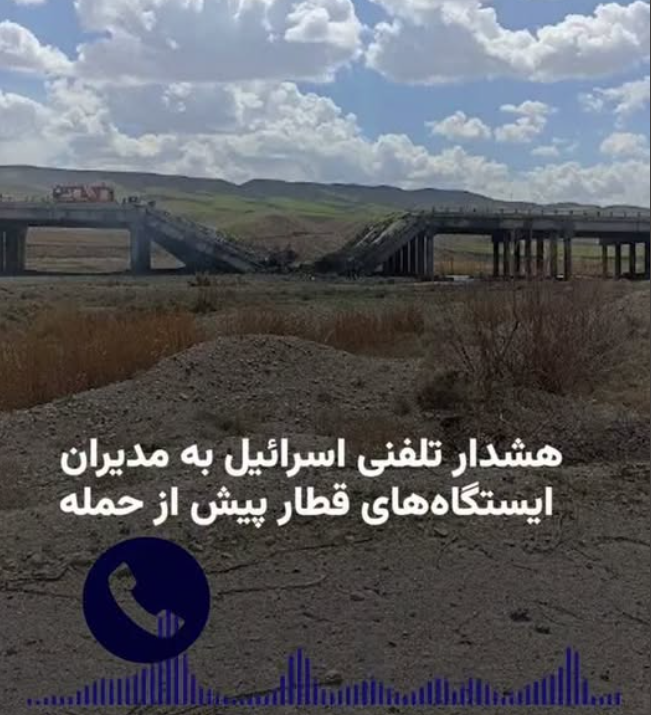
A recently leaked audio recording is drawing global attention, offering a rare and controversial glimpse into the human dimension of conflict. The call, reportedly between an Israeli operative and an Iranian train station manager, has quickly become a focal point in discussions about military conduct, civilian safety, and moral responsibility during wartime.
According to the transcription, the Israeli caller speaks in a calm, direct tone, warning that strikes on railway infrastructure are imminent. He urges the station manager, identified as Mr. Mohammadi, to immediately evacuate all personnel and prevent civilians from entering the area. The message is clear and urgent: clear the location to avoid unnecessary harm. The manager responds briefly, signaling acknowledgment before the call ends.
What has made this exchange so widely discussed is the broader context surrounding it. Reports suggest that, at the time, internet access in parts of Iran had been restricted, limiting the flow of information to civilians. In such conditions, direct communication like this—if verified—raises questions about how warnings are issued and received during high-risk military operations.
Supporters of Israel point to this incident as an example of an effort to minimize civilian casualties, arguing that advance warnings demonstrate a commitment to precision and accountability, even in the midst of conflict. Critics, however, urge caution, emphasizing the importance of independently verifying such claims and considering the wider humanitarian impact of any military action, regardless of intent.
At the same time, the situation has reignited longstanding criticism of Iran’s leadership, particularly allegations that authorities place civilians in harm’s way or restrict access to critical information during periods of unrest or military tension. These claims, often raised in international debates, remain deeply contested and politically charged.
Beyond the immediate controversy, this moment highlights a larger issue: the evolving expectations of warfare in the modern era. With global audiences watching in real time, actions taken on the battlefield are no longer judged solely by strategic outcomes, but also by their ethical implications. The line between military necessity and humanitarian responsibility is under constant scrutiny.
For many observers, the central question is not just about what happened in this single exchange, but what it represents. Can advanced warning systems and direct communication reduce civilian harm? And how should governments balance transparency, security, and accountability in times of conflict?
As tensions continue to shape the geopolitical landscape, one thing remains clear: public perception of right and wrong in warfare is more influential than ever. Incidents like this do more than reveal tactics—they shape narratives, influence opinion, and ultimately define how history will judge those involved.
In a world where information travels instantly but truth can still be hard to verify, moments like these remind us to look deeper, question carefully, and consider the human cost behind every headline.