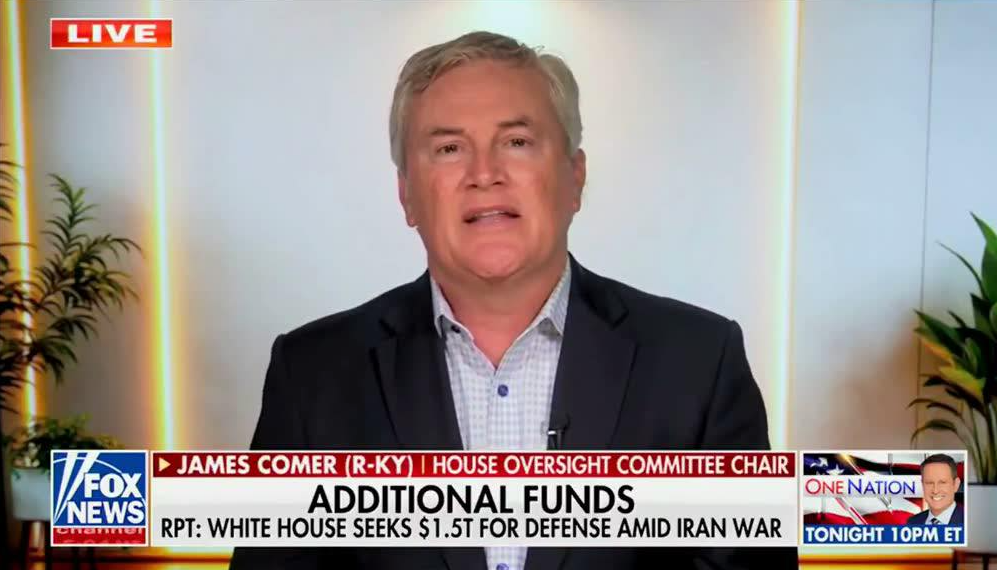
House Oversight Committee Chairman James Comer delivered a fiery critique of Democrats during a recent appearance on Fox News’ The Big Weekend Show, accusing them of putting politics ahead of the country during a time of global tension. The Kentucky Republican didn’t mince words as he addressed ongoing debates over foreign policy, military funding, and U.S. strategy toward Iran.
Comer argued that partisan divisions have reached a point where, in his view, some political leaders are more focused on opposing President Donald Trump than supporting policies they might otherwise back. He claimed this dynamic is especially evident in discussions surrounding national security and defense spending.
During the interview, Comer contrasted Democratic support for previous international aid packages—particularly for Ukraine—with current resistance to increased military action or funding related to Iran. He framed this as an inconsistency, suggesting that priorities shift depending on the political context rather than the issue itself.
The broader debate centers on how the United States should respond to Iran and its nuclear ambitions. Comer described Iran as one of the most serious threats facing the U.S. and its allies, emphasizing the importance of maintaining a strong military posture. He argued that decisive leadership is necessary in moments of international uncertainty, even when those decisions come with political risks.
At the same time, Comer acknowledged concerns about government spending. He noted that while Republicans are often cautious about increasing defense budgets, current global conditions may require additional investment. However, he stressed that any new spending should be balanced with cuts elsewhere, particularly in areas where he believes there is waste, fraud, or inefficiency.
A key part of his argument focused on welfare programs. Comer called for stricter oversight and reforms to ensure that assistance is directed toward those who need it most, including vulnerable Americans such as low-income families, seniors, and individuals with disabilities. He suggested that reducing improper payments and misuse of funds could free up resources for national priorities like defense.
Comer also addressed the challenges of passing legislation in a divided government. He pointed out that while the House may advance certain bills, the Senate’s procedural rules—such as the 60-vote threshold—often make it difficult to move forward without bipartisan support. As a result, some proposals stall despite strong backing in one chamber.
Looking ahead, Comer indicated that upcoming legislative battles will likely focus on military funding and border security. He emphasized the importance of maintaining what he described as a position of strength on the global stage, arguing that U.S. leadership plays a key role in shaping international stability.
The remarks reflect the broader political divide in Washington, where competing visions for foreign policy, spending, and governance continue to shape national debate. As tensions abroad and disagreements at home persist, leaders from both parties are making their case to the American public—each offering a different perspective on what it means to put the country first.